Network Structures
in Organizational Network Analysis (ONA)
Understanding network structures is crucial in Organizational Network Analysis (ONA) as they
reveal how relationships and interactions shape workplace dynamics. Here, we explore three
key network structures: Small World Phenomenon, Scale-Free Networks, and Core-Periphery
Structures, tailored to an organizational context.
Small World Phenomenon
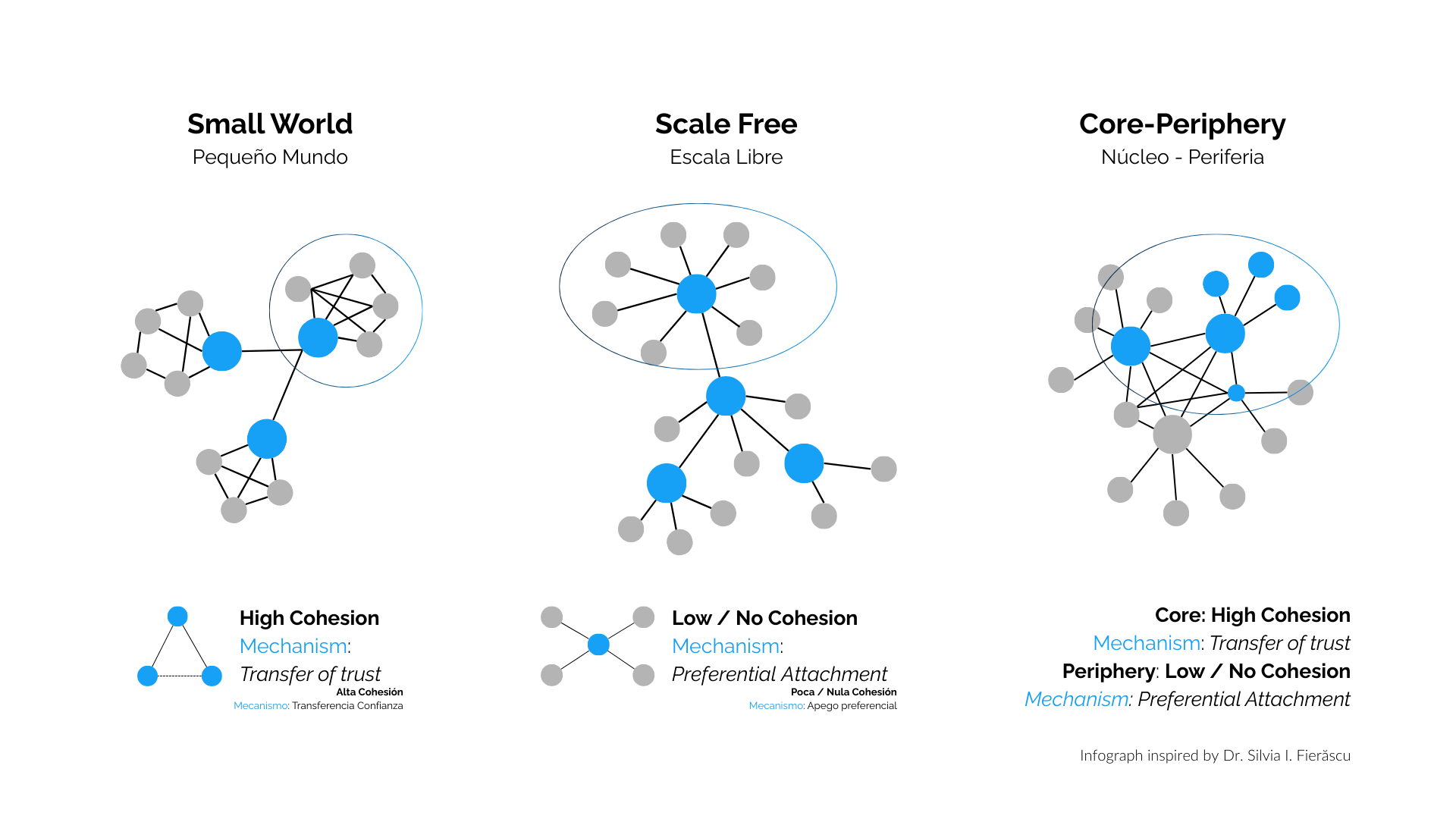
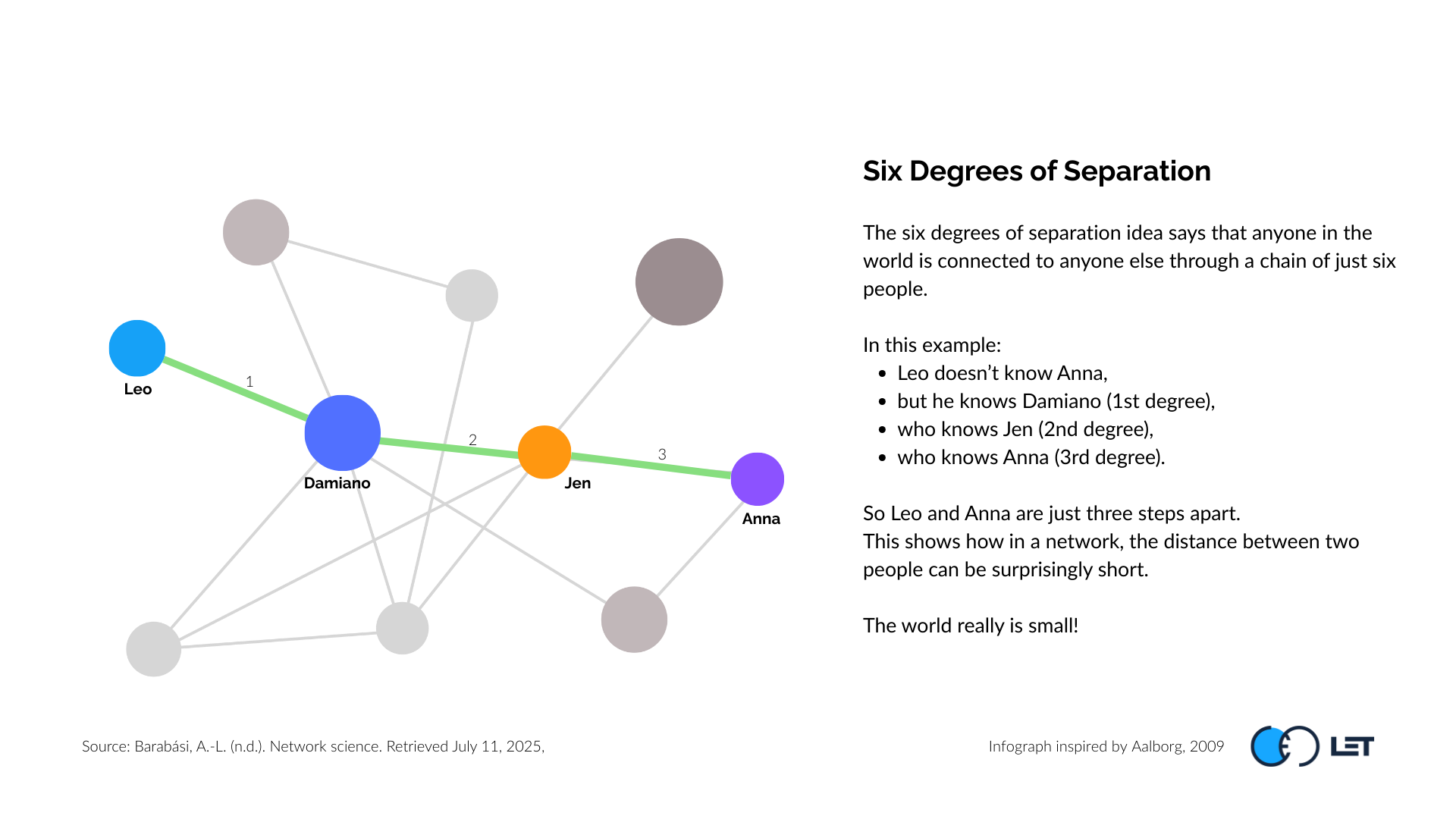
The Small World Phenomenon describes networks where most nodes are not directly connected but can reach each other through a small number of intermediaries. In an ONA context, this structure highlights efficient communication and collaboration across an organization.
- Characteristics: High cohesion within clusters of employees (e.g., tight-knit teams or departments) with a few bridging ties connecting different groups.
- Mechanism: Transfer of trust. For example, if Employee A trusts Employee B, and Employee B trusts Employee C, A is likely to trust C through B’s endorsement, even if A and C are in different departments.
- Visualization: Clusters of nodes (e.g., teams) with a few key connectors (e.g., cross-functional liaisons) linking them, forming short paths across the organization.
Scale-Free Networks
Scale-Free Networks are characterized by a few highly connected nodes (hubs) and manynodes with fewer connections, following a power-law distribution. In ONA, this structure often emerges naturally in workplaces due to how relationships form.
- Characteristics: Low or no cohesion between most nodes, with a few individuals (hubs) having significantly more connections.
- Mechanism: Preferential attachment. Employees tend to connect with already well-connected individuals, such as influential leaders or key knowledge holders. For instance, a new employee is more likely to seek advice from a well-known expert in the organization.
- Visualization: A central hub (e.g., a senior leader) with many connections radiating outward to less-connected nodes (e.g., team members or new hires).
Core-Periphery Structures
Core-Periphery Structures divide a network into a densely connected core and a sparsely connected periphery. In ONA, this structure helps identify central players and those on the outskirts of organizational interactions.
- Characteristics:
- Core: High cohesion among central nodes, representing influential employees or teams with strong collaboration and trust.
- Periphery: Low or no cohesion, consisting of less-connected employees or teams with fewer interactions.
- Mechanism: Dependency. Peripheral nodes often rely on the core for resources, information, or decision-making. For example, a peripheral team may depend on a core leadership group for strategic direction.
- Visualization: A dense cluster of core nodes (e.g., executive team) surrounded by loosely connected peripheral nodes (e.g., remote workers or new hires).
Applications in ONA
These network structures provide actionable insights for workplace improvement:
- Small World Phenomenon: Leverage short paths to enhance cross-departmental collaboration, ensuring knowledge flows quickly between teams.
- Scale-Free Networks: Identify hubs as potential bottlenecks or key influencers. Support these hubs to prevent overload or utilize them to disseminate information efficiently.
- Core-Periphery Structures: Strengthen ties between core and periphery to reduce silos, ensuring peripheral employees feel included and have access to critical resources.
By analyzing these structures, organizations can optimize communication, foster inclusivity, and drive effective collaboration.